The Saint, the Eildons and the Long Way to the Cheviots: A Slow Cuthbert Weekend
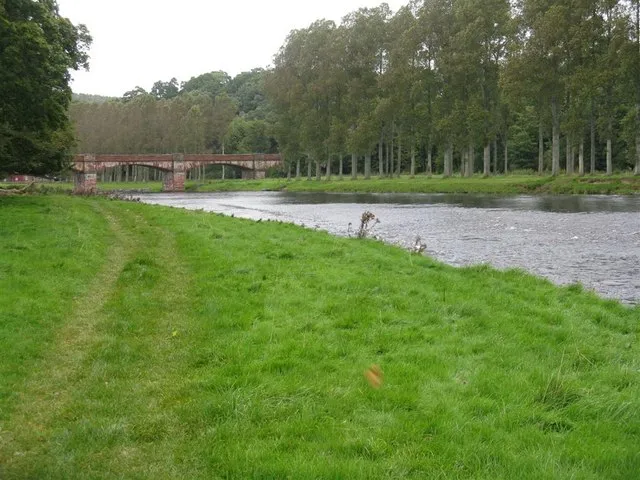
Photo: M J Richardson, CC BY-SA 2.0, via Wikimedia Commons
Most people meet St Cuthbert’s Way as a challenge: sixty-odd miles from Melrose to Lindisfarne, a fortnight’s annual leave and a growing stack of blister plasters. Fair enough. But the central Borders section works beautifully as a two-day heritage weekend for people who like old kirks, small shops and a bit of saintly gossip more than they like route spreadsheets.
This is not a gear-heavy guide. It is a slow pilgrimage, Borders-style: start at Melrose Abbey, head for the Eildons, follow the waymarks through St Boswells and Harestanes, then finish under the Cheviot foothills at Kirk Yetholm. You will get muddy. You will also get cake.
The saint who keeps turning up
Cuthbert began his monastic life at Old Melrose in the seventh century, a short way from the later abbey ruins. He later moved to Lindisfarne, spent time as a hermit on Inner Farne and died in 687. His coffin was carried around the north for years after Viking raids, which is why so many places claim a piece of him. The Borders section of the way is a reminder that his story is not just a Holy Island story. It is a Tweed and Teviot story too.
Locals have long called him Cuddy, hence Cuddy’s Way. You will see the name on cafés, leaflets and the occasional pub sign. Treat it as a friendly nickname rather than a brand. The route itself is waymarked and, as of November 2026, still pleasantly free of turnstiles and ticket desks.
Day one: Eildons, a kirk and a bookshop
Start at Melrose Abbey, not because Cuthbert built it — he didn’t — but because the waymarkers do. The abbey ruins are worth half an hour before you set off, especially if the morning is crisp and the light is coming sideways through the stonework. Then follow the signs up towards the Eildon Hills.
The climb is the day’s proper exercise: short, sharp and exposed. On a clear November morning the three Eildons look like sleeping animals, and the Tweed valley opens up behind you. On a wet one they look like a good reason to take the lower alternative. The route is not a competition. If the cloud is down and the wind is doing its worst, drop to the road and save your ankles.
Coming down towards Bowden, you pass one of those old Borders kirks that seems to have been dropped into a field by accident. Bowden Kirk is a good place to pause, read the stones and remember that this landscape was busy with monks, reivers and farming long before anyone invented the weekend break. From there the path ambles into St Boswells, where Mainstreet Trading is the obvious stop: bookshop, café, deli and general refuge from the weather. A bowl of soup and a browse is not a detour. It is part of the pilgrimage.
If you are doing the full two-day version, catch a Borders Buses service from St Boswells to Jedburgh for the night. Check the timetable before you commit, especially on Sundays. The bus saves you a dull road walk and leaves you fresh for the Cheviot side.
Day two: Harestanes to the Cheviot foothills
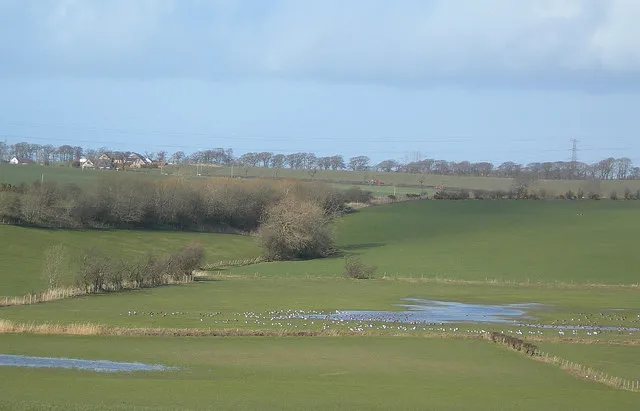
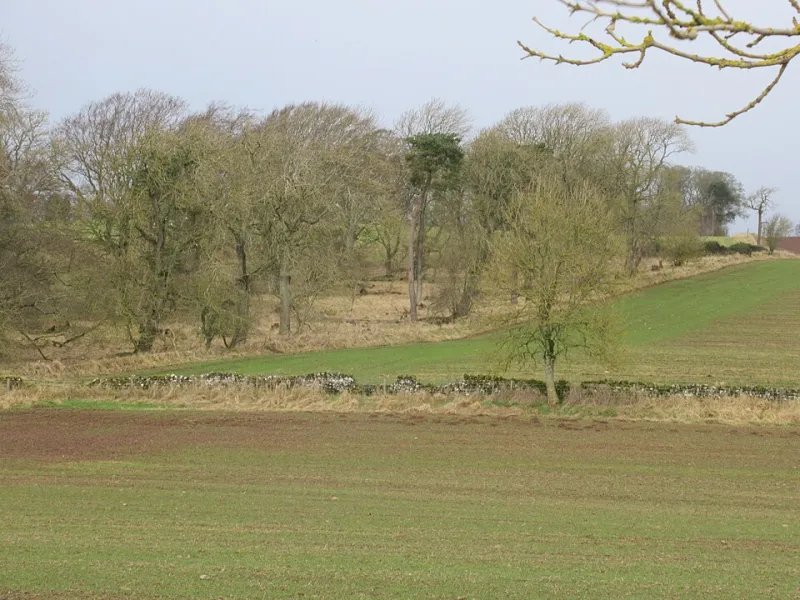
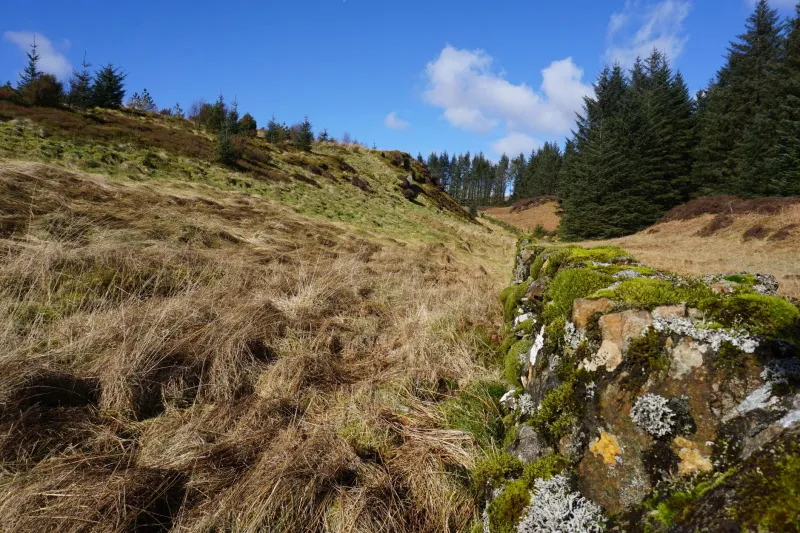
Start the second day at Harestanes, the countryside visitor centre near Ancrum. From here the way heads east through farmland and small woods towards Morebattle. This is gentler walking than the Eildons, but it has its own drama: wide skies, old field boundaries and the Cheviots slowly growing in front of you.
Morebattle is a proper small Borders village, with a kirk, a village store and the kind of quiet that makes you lower your voice without meaning to. The store is the place to top up on water and something sugary. Then it is a short, satisfying stretch to Kirk Yetholm, where the way meets the edge of the Cheviot foothills and the landscape starts to feel more upland than pastoral.
Yetholm Kirk is worth a look before you finish. So is the village green. If you have time, the Border Hotel in Kirk Yetholm is the traditional end-of-walk pub, though it is also a sensible place to wait for a bus. From here, local services run back towards Kelso and Jedburgh. Again: check times, carry a phone and do not assume a Sunday service will rescue you.
Buses, weather and the honest practicalities
November is a good month for this route if you accept two things. First, daylight is short. Second, the Eildon section is exposed. A headtorch is not gear wankery in November; it is common sense. So is a waterproof jacket, a warm layer and shoes with some grip. You do not need a full expedition kit. You do need to respect the forecast.
The route is waymarked, but carry a paper map or an offline map on your phone. The Borders does not always oblige with signal. OS Explorer sheets cover the area well, and the St Cuthbert’s Way guidebook is useful if you want the history without guessing.
Buses are the practical bit that makes a linear walk work. Borders Buses services link Melrose, St Boswells, Jedburgh, Kelso and the Yetholm area, but frequency drops sharply at weekends. Plan your day around the bus you know you can catch, not the one you hope will appear. If you are relying on a Sunday service, ring ahead or check the operator’s current timetable. In 2026 this is still the least glamorous and most useful piece of planning you can do.
Eating and sleeping without overplanning
Melrose has independent cafés and bakeries near the abbey, good for a pre-walk bacon roll. St Boswells has Mainstreet Trading for lunch. Morebattle has its village store. Kirk Yetholm has the Border Hotel. Jedburgh and Kelso give you the widest choice for an overnight stop, and both have enough pubs and cafés to make a wet evening feel like a treat rather than a setback.
Book accommodation before you go, even in November. The Borders is not overrun, but small places fill for weekends, and a cosy room beats a dark drive home.
Why do it slowly
St Cuthbert’s Way rewards the curious more than the fast. The point is not to tick off a long-distance path. The point is to notice how the Eildons give way to the Cheviots, how many old kirks sit just off the route, and how a saint from the seventh century still shapes the names on the café chalkboards. Two days is enough to get a taste. It is also enough to make you want to come back and walk the rest.