Cold Feet, Full Skies: A Winter Birdwatching Weekend in the Borders
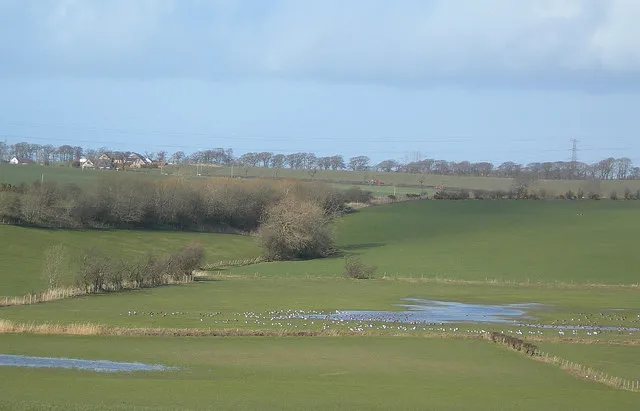
Photo: Mary and Angus Hogg, CC BY-SA 2.0, via Wikimedia Commons
It is a truth widely acknowledged that a Borders weekend in winter needs a decent coat. Less obviously, it also needs binoculars. Between November and February the region fills with visitors who have travelled a very long way to be here — and unlike the summer crowds, they arrive on the tide and leave at dusk.
Why the cold is the whole point
Winter birding is not a consolation prize for the summer you missed. The leaves are off, the hedges are bare, and the light — when it turns up — is low and golden and lies flat across the water. Birds that spend the breeding season scattered across the Arctic are suddenly concentrated onto a handful of estuaries, lochs and stubbles within an hour's drive of one another. For a beginner that concentration is everything. You do not need to know forty species. You need one good flock and forty minutes to look at it properly.
The Borders winter cast list is generous. Whooper swans come in from Iceland, pink-footed geese from Iceland and Greenland, and fieldfares and redwings strip the hawthorn along nearly every lane. Add kites and buzzards over the stubble, plus short-eared owls hunting the moorland edges at last light, and a quiet weekend acquires a plot.
Start where the river meets the sea
The Tweed estuary at Berwick is the obvious first stop, and obvious for good reason. The river here is wide, the sandbanks are extensive, and at high tide the wildfowl and waders are pushed up towards the town rather than scattered to the horizon. Come on a rising tide and the whole thing comes to you.
Stand on the pier, the promenade or the landward edge at Spittal and scan. Shelduck, wigeon, pintail, knot, bar-tailed godwit and curlew are all realistic in a single sweep, with grey seals as a bonus. Over the water, Lindisfarne holds the big pale-bellied brent goose flocks — technically Northumberland, but on a clear day you are watching the same estuary. Berwick itself is on the English side of the border, which is either a technicality or a good excuse for a bacon roll depending on your politics.
One plea, and it matters: do not walk out onto the sands towards a roost. Disturbance at high tide is the single most damaging thing a well-meaning visitor can do here. Watch from the hard stuff, keep dogs close, and let the birds keep their rest.
Geese over the stubble
Inland, the pattern is different and no less spectacular. Pink-footed geese commute between roosts on the estuary and feeding fields inland, moving at first and last light in long ragged skeins that you often hear before you see. The flat farmland between Coldstream, Duns and the coast is the place to catch them, and any lane with a gateway and a wide view will do.
Scan the same fields for red kites and buzzards, and the quieter upland fringes — the lanes above the Kale, the moorland edges towards the Cheviots — for short-eared owls. Owls are never guaranteed, but the last forty minutes of daylight on a still, grey afternoon is the best odds you will get. Bring a flask, stand still, and resist every instinct to use a torch.
Hides, paths and places you can actually reach
You do not need a permit or a four-figure lens. The little hide beside the loch at the Hirsel, outside Coldstream, is a gentle introduction — water, woodland and a bench, with the estate café a short walk away. Paxton House has riverside and woodland paths that suit a slow hour with a scope. St Abb's Head, on the Berwickshire coast, is a cliff-top walk rather than a hide, but the winter grey seals and seaduck make it worth the wind.
All of it is on public paths, and most of it costs the price of parking.
Thawing out
A birdwatching weekend is really a series of small warm rooms interrupted by cold ones. Soup in Coldstream, a bakery stop in Melrose, a fire and a pint in Kelso, a chowder in Eyemouth — none of it needs booking in November, and all of it does the job.
A weekend that works
Saturday: estuary at a rising tide first thing, lunch in Berwick, an afternoon of woodland and river at Paxton, then dusk on the farmland edge listening for geese and watching for owls. Sunday: the Hirsel loch, a slow lunch in Coldstream, and a coastal hour at St Abb's or Burnmouth on the way home if the light holds.
Kit, and manners
Layer up, wear boots you trust, and take 8x42 binoculars if you have them — anything is better than nothing. A tide table beats any app, and a notebook beats your memory.
The etiquette is simple. Keep your distance, stay on paths, no playback recordings, dogs on leads around stock and roosts, and stay quiet at dusk. Share sightings freely; the Borders birding community is small, friendly and mildly obsessed.
Book nothing. Check the tide. Take the flask.