Towers, Raids and Truce Days: A Beginner’s Reiver Weekend in the Central Borders
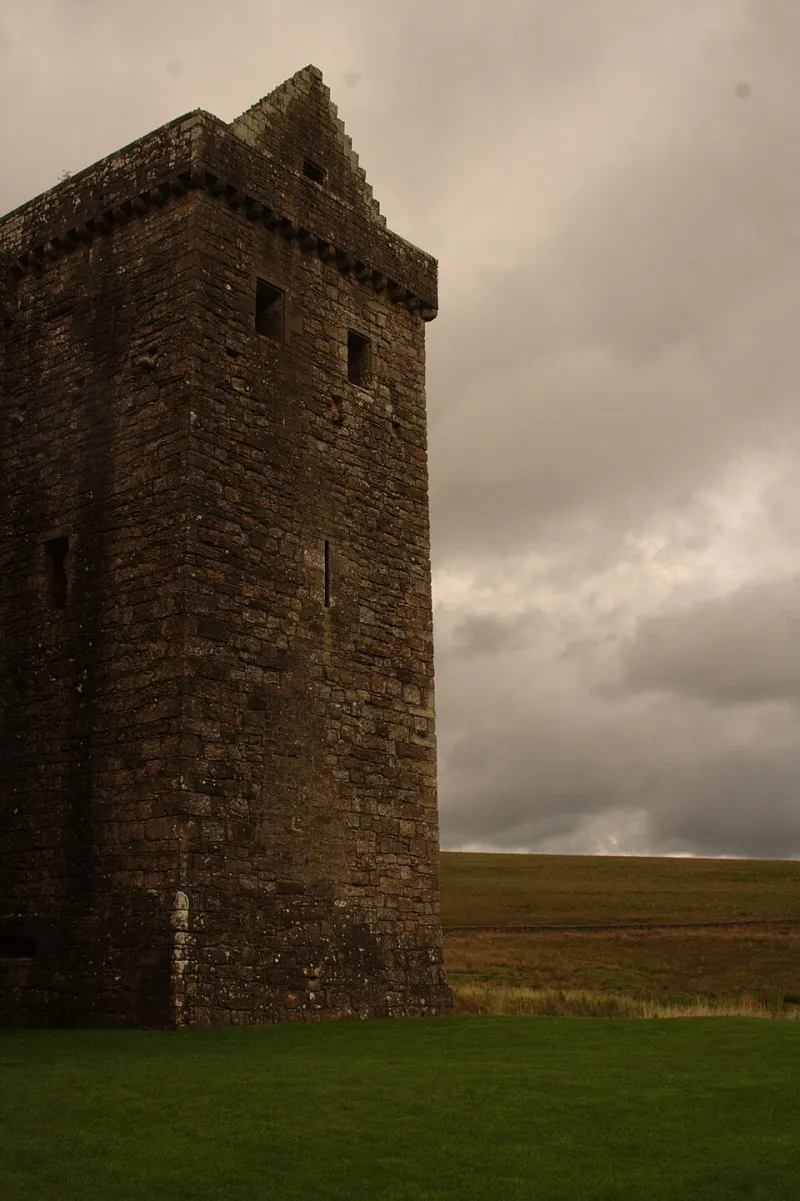
Photo: Mainlymazza, CC BY-SA 4.0, via Wikimedia Commons
The Border Reivers can sound like a costume drama: surnames, horses, moonlight raids and a lot of stone towers. The reality was harder and more interesting. For roughly 300 years, from the late Middle Ages into the early 17th century, families on both sides of the Anglo-Scottish border lived with raiding, feuding and a legal system that often struggled to keep up. A weekend in Peebles, Hawick and Hermitage is a good way to make sense of it without drowning in dates.
This is a driving-and-walking trail. You need a car for the Hermitage leg, and winter daylight is short, so start early and check opening times before you go. The history is complicated; the landscape helps.
First, a plain-English primer
The word reiver comes from reive, to raid. These were not a tribe or a clan in the Highland sense. They were families and surnames — Armstrongs, Elliots, Grahams, Kerrs, Scotts, Douglases and many others — living in the Borders marches, where Scottish and English authority met and frequently failed to agree. The border was divided into three marches on each side, and Wardens were appointed to keep order. They had limited success.
Raiding was part of life, but it was not random. Cattle, horses, goods and prisoners were taken. Feuds between families could run for generations. There were truce days when disputes were heard, and there was the hot trod, the lawful pursuit of raiders with a piece of burning turf carried on a spear. There was also blackmail, which in this context meant a payment for protection rather than the modern crime. It was a world of practical arrangements, hard bargaining and sudden violence.
The tower houses and pele towers you see in the Borders are the physical trace of that insecurity. They were not romantic castles for lords with large armies; they were fortified homes and storehouses, built to hold off a raid until help arrived or the raiders moved on. Bastle houses — sturdy two-storey farmhouses with animals below and people above — tell the same story in a quieter way.
Day 1: Peebles and the Tweed valley
Start in Peebles, a market town that feels civilised until you notice how many old defensive sites sit around it. The Tweeddale Museum and Gallery in the Chambers Institution is a good first stop for local context; it is small, free and useful for separating fact from folklore. Then walk the riverside path towards Neidpath Castle. The castle itself is not a reiver museum, but the view of it above the Tweed makes the point: this was a landscape of watchfulness, with good ground and bad neighbours.
A short drive or longer walk from Peebles takes you towards Traquair House, one of the great old houses of the Borders. Its story stretches across centuries, and it helps to see how power, land and family loyalty worked in this part of the world. Check opening times carefully outside high season; winter visits are limited.
For lunch, Coltman’s Kitchen in Peebles is an independent stop with a local feel, and Cocoa Black is the place if the weather demands chocolate. For an overnight, the Traquair Arms Hotel in Innerleithen makes a sensible base, or look for a small guesthouse in Peebles itself. Book ahead at weekends and check winter opening directly.
Day 2: Hawick, towers and the museum
Drive to Hawick, about 40 minutes from Peebles. Hawick’s centre is a reminder that reiver history did not happen in isolation from ordinary town life. Drumlanrig’s Tower, a stout old stronghold in the middle of the town, is a good place to start. It was associated with the Douglas family and has seen more than its share of trouble. From there, wander the High Street and notice how many buildings feel built for defence as much as display.
Then head to Wilton Lodge Park and Hawick Museum. The museum covers local history, including the textile industry that later defined the town, but it also gives you the longer arc in which reiving sits. The park itself is a gentle walk along the river, useful for stretching your legs before the afternoon drive.
For lunch, The Night Safe in Hawick is an independent café with a straightforward, welcoming approach. If you plan to stay the night, Mansfield House Hotel is a comfortable independent option on the edge of town; again, check winter availability directly.
Day 3: Hermitage Castle and Liddesdale
The road south from Hawick towards Hermitage is where the history becomes landscape. You leave the tidy town centre behind and follow the valley into Liddesdale, a route that feels remote even now. Hermitage Castle is a bare, muscular ruin in a sheep-grazed valley, and it feels less like a visitor attraction than a warning. This was a stronghold of the Douglas family and later became entangled with the story of Mary, Queen of Scots, and the Earl of Bothwell. Sir Walter Scott used it in his writing; the place has a long afterlife in imagination as well as fact.
Check Historic Environment Scotland for opening times before you commit to the trip. Hermitage is seasonal, and winter access can be limited. Even when the castle is closed, the approach and exterior can often be viewed from the track, but respect fences and private land. The walk from the parking area is short and uneven; wear boots and do not rely on smooth paths.
On the way back, Newcastleton is a useful stop for a late lunch or a village shop, though winter hours can be short. This is not a day for tight schedules. The pleasure is in the drive, the silence and the sudden understanding of why this valley mattered.
Practical notes for the weekend
Allow about 40 minutes to drive from Peebles to Hawick, and another 30 to 35 minutes from Hawick to Hermitage. Fuel up before the Hermitage leg; phone signal can be patchy. In winter, start early and carry a torch, waterproofs and warm layers. Museums and town paths are mostly manageable for most visitors, but Hermitage’s approach is rough and not suitable for wheels.
This trail is not about glorifying violence. It is about understanding a border society that lived with uncertainty and built its houses accordingly. The reivers were not simply romantic outlaws, and they were not simply villains. They were families trying to survive in a place where law was local, loyalty was personal and the next raid might come from the next valley.
That is why the towers, museums and ruined strongholds are worth a weekend. They turn a confusing history into something you can see, walk through and argue about over coffee.