After the Sun Sets at Four: Short Walks, Warm Suppers and Serious Stargazing in the Borders
There's a particular moment in the Borders in early winter, somewhere around ten past four on a clear afternoon, when the last of the light slides off the top of the hills and the valley goes quiet in a way it doesn't in summer. You're still in walking boots. You haven't had supper. And yet the day has already handed over to the night, which is either a disaster or an opportunity depending entirely on how you've planned your afternoon.
Plan it properly and it's the second one. What follows is a loose two-night shape for a trip built around three things that work unusually well together in November and December: a short walk at dusk, a proper sit-down supper, and an hour or so outside afterwards with your head tipped back.
Why the dark here is genuinely different
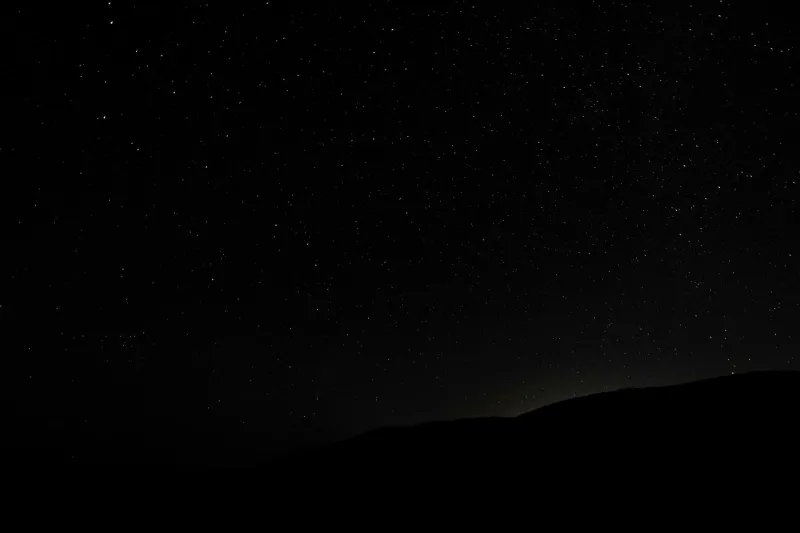
The Borders isn't a designated dark sky park, and it doesn't need to be. What it has is a lot of space and not many people. Once you're a few miles up the Ettrick, the Yarrow, the Megget or the Manor Valley, the nearest streetlight is often a farm steading, and the glow from Galashiels or Hawick sits low and orange on the horizon rather than overhead.
The result is that a perfectly ordinary village car park can outperform a lot of purpose-built viewing sites. On a clear night you'll pick out the Milky Way as a smudge rather than a suspicion, and the difference between looking up in a town and looking up two valleys along is not subtle – it's the difference between seeing stars and seeing the sky.
The shape of the weekend
The mistake people make is trying to do too much in daylight and then squeezing stargazing in afterwards like a chore. Invert it. Keep the afternoon walk short and close to where you're eating, eat early, then drive ten minutes and stop.
- Friday: arrive mid-afternoon, walk 45–75 minutes from the door of wherever you're staying, eat at 6, drive out to a dark spot for 8.
- Saturday: a longer morning walk while the light is good, an easy afternoon (museum, bookshop, café), same dusk-and-dark pattern in a different valley.
- Sunday: breakfast, a low-level riverside wander, home before the light goes.
Two nights, two different valleys, and you'll have seen more of the night sky than most people manage in a year.
Timing the light
In early December, sunset across the central Borders falls around 3.45–4pm, with usable twilight until about half four and proper astronomical darkness arriving nearer half five. That's the window to work with.
Aim to be walking by 2.45pm. That gives you an hour of good light, half an hour of gloaming on the way back, and a return to the car or the inn door before you need a torch. Take the torch anyway. A headtorch with a red mode is the one piece of kit worth buying specifically for this – red light preserves your night vision, which is exactly what you want if you're heading straight from the walk to the stargazing.
Forestry tracks and riverside paths are the sensible choice. Anything involving a summit, a bog or an unmarked route should be a morning job in December, not a 4pm one.
Three valleys worth the drive
St Mary's Loch and the Yarrow. The classic, and for good reason. Park at the loch's southern end and walk a section of the old road, then eat at the Glen Café if it's open – winter hours are seasonal and often weekend-only, so ring ahead. The surrounding hills cut out a lot of low horizon glow.
The Ettrick, around Ettrickbridge and beyond. Quieter than the Yarrow and darker still once you're past the village. There's a decent there-and-back along the valley floor, and the Cross Keys at Ettrickbridge is the kind of old inn that makes a winter night feel intentional rather than accidental. Book a table; it isn't vast.
The Manor Valley, near Peebles. Handy if you're based in the town and want to be back in a bar within twenty minutes. A short out-and-back from the road end, then supper in Peebles – the Traquair Arms at Innerleithen is a solid alternative if you're circling back that way.
Whichever you pick, check opening hours before you commit. Valley pubs in winter keep honest but eccentric hours, and there is nothing sadder than a walk that ends at a dark window.
Supper, then stars
Eat at six. Not half seven. This sounds tedious and is in fact the whole trick – it means you're out again by eight, when the sky is properly dark and you're not so full that standing in a cold field feels like a punishment.
Then drive somewhere with a wide southern or eastern horizon. The southern uplands around the Ettrick and Tweedsmuir are excellent; so is the country above Newcastleton if you're coming from the east. Use a proper passing place or a car park, never a field entrance, and keep your headlights off once you've stopped.
Give your eyes twenty minutes. No phone. Then the sky fills in – the Pleiades overhead, Orion climbing in the east, the hazy smear of the winter Milky Way arcing over towards the west, and if you're lucky a bright planet doing something obvious.
The small print
It will be colder than you think, and the cold arrives faster when you're standing still rather than walking. Take more layers than the walk required, a flask, and a mat or blanket to sit on. Deer are active on valley roads after dark and they do not observe the speed limit. Tell someone where you're going, even if it's just a text to the person holding the pub table.
And if the cloud comes in? That's the Borders for you. The inn is warm, the fire is lit, and tomorrow's forecast is already looking better.